
ANNUAL REPORT

2025
Disability Rights of West Virginia
As we close out another year of service, growth, and unwavering commitment, I’m reminded of what truly defines our agency: the people. Every day, individuals with disabilities trust us to stand beside them, advocate for them, and help create opportunities for fuller, richer lives. That trust is an honor we never take lightly.
None of this work would be possible without our extraordinary staff, whose compassion and determination shine through in every challenge they face and every victory they help make possible. Their dedication is the heartbeat of our mission.
We are equally grateful for our board members, whose guidance, vision, and steadfast support ensure that our agency continues to move forward with purpose and integrity. Their leadership strengthens our foundation and fuels our future.
As you read through this newsletter, we hope you feel the same pride and gratitude we do. This year has been one of resilience, collaboration, and meaningful impact — and together, we look forward to an even brighter year ahead.
Susan Given, MSW, LSW,
Executive Director

Overview
Monitoring
In FY 2025, DRWV conducted 246 monitorings at 125 state and private facilities and public schools. These monitorings were conducted over eleven major categories including: Intermediate Care Facilities; WV Division of Corrections and Rehabilitation; Children’s Residential Facilities; State and Private Nursing Homes; State and Private Psychiatric Hospitals; Assisted Living Facilities; Specialized Family Care Homes; Forensic Group Homes; IDD Waiver Group Homes; Legally Unlicensed Care Homes; and Public Schools.
Cases
In FY 2025, DRWV opened 1,063 federally funded Service Requests for 980 clients. The following table shows service requests broken down by federal funding source.
Special Education Related Service Requests by Federal Program:
Outreach and Training
DRWV set up our outreach display at thirty-two events, presented a general outreach presentation nine times, and provided training during seven events (not including voting rights) in FY 2025.

DRWV developed a presentation entitled “Advocacy for Justice Involved Individuals with Disabilities” and had the opportunity to present it at two different events in FY 2025. This enhanced “helping professionals” with understanding the high prevalence of disabilities among those who experience incarceration, how WV could make improvements to its community support systems to aid reentry efforts, and the “helping professional’s” role as it relates to this population..
A Senior Advocate provided training about service and emotional support animals during an event at the Ohio County Library. She was invited to do this training after having done one for a similar group in the previous fiscal year.

DRWV’s Legal Director accepted the annual advocacy award from National Disability Rights Network (NDRN). This was recorded and appeared on NDRN’s YouTube channel which has 959 subscribers. https://www.youtube.com/watch?v=fZ8ifXVogKc.

Access to Places and Services

In the fourth quarter or FY 2025, the decision was made to begin an effort to evaluate each of the state parks in WV who advertise the availability of accessible fishing. For the parks that have fishing, lodging was also monitored when applicable. In just three months, twenty-five parks were assessed. Staff were very well received by most of the parks. Several of them indicated a desire to make their services more accessible and welcomed feedback. At the time of this report, findings had not yet been sent to the parks. This effort will continue into FY 2026.

In FY 2024, a client with a traumatic brain injury (TBI) requested assistance with an issue related to the accessibility of an office that provides services specifically for people with TBIs, particularly the inoperable chair lift. DRWV communicated with the client and staff at the provider’s office regarding the accessibility issues and advocated for the problem to be corrected. As a result, in FY 2025 the chair lift was made operational and the client gained access to the services they provide.
In FY 2024, two Service Requests were opened to address the lack of accommodations provided by the US Postal Service (USPS) for two different clients. They were both resolved favorably in FY 2025. In both cases, DRWV researched the applicable rules, regulations, and laws.
For one case, an accessibility study was conducted at a Post Office. The Postmaster was contacted, acknowledged the lack of accessibility, and agreed to remedy the situation as soon as possible pending approval from his supervisor.
For the other case, DRWV negotiated with the USPS to provide an accommodation to the client by delivering mail onto her property rather than her mailbox, which was a mile away from her home.

Assistive Technology
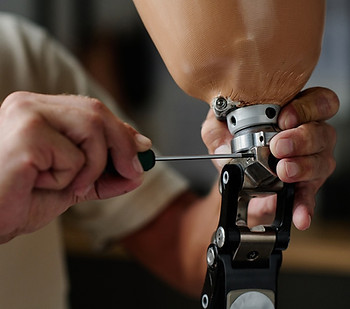
A client who was homeless at the time was being denied services by a Durable Medical Equipment (DME) provider due to having no home address other than the shelter. The client requested assistance with getting the DME provider to meet with him to fit him for his prosthetic leg. The Advocate discussed the client's concerns with him then met him at the DME provider’s location. The client was then seen by the DME provider on the day he met with the Advocate as well as another day since then to be fitted for his prosthetic leg. He was able to make a follow-up appointment as well.
Education
The parent of a student with a serious emotional disturbance requested assistance to ensure her son received a free and appropriate public education. The Advocate convened a Section 504 Plan meeting to address the district's failure to support him since middle school, when his Individualized Education Program (IEP) was removed and replaced with a 504 Plan. During the meeting, it was also noted that the parent had repeatedly asked for information about the Career and Technical Education (CTE) program, but the school told her he was too far behind on credits to participate. The Counselor clarified that a credit-recovery option existed within the CTE program that would allow him to catch up and graduate with his peers. As a result of DRWV's intervention, the student received a 504 Plan that supports his participation in the CTE program. He was accepted into the Options Program and has been doing exceptionally well.

A mother requested assistance with advocating for her son's educational rights. The Advocate requested and reviewed education records then attended an Individualized Education Program (IEP) meeting where the team agreed that the student needed a Functional Behavioral Analysis (FBA) and Positive Behavioral Interventions and Support (PBIS) Plan, as well as an Occupational Therapy evaluation. School staff received PBIS training. PBIS and sensory supports were added to the IEP. A behavior contract was also added. School staff appeared to have had an attitudinal change, and the student was doing well with self-advocacy and self-awareness.
Employment/Transition Planning
A client requested assistance regarding a change in funding for out of state visual training that the WV Division of Rehabilitation Services (WVDRS) had previously agreed to provide. DRWV communicated with WVDRS to facilitate continued funding for visual training program. As a result, WVDRS agreed to continue funding the visual training at school in Louisiana.

A Senior Advocate addressed an issue with the patient work program at one of the state psychiatric hospitals. The hospital had a requirement for two staff to escort patients who participated in the work program. After the Advocate discussed this with the supervisor, it was determined that patients who met the qualifications for this program should only need one staff member to escort them.
Hospital Discharge Planning/
Least Restrictive Environment
A client with intellectual/developmental disabilities requested DRWV's assistance with discharge planning from a private psychiatric hospital. Advocates attended treatment team meetings and communicated with the client, hospital, and providers to facilitate a smooth discharge back to the community. As a result of DRWV’s intervention, the client is now living in the community with supports and services in place through the Intellectual/Developmental Disabilities Waiver (IDDW) to help him stay out of the hospital. He has learned skills to advocate for himself as well.
In FY 2023, a client with serious mental illness in a state psychiatric hospital requested assistance with getting discharged. At the time, she had been there for two years. The Advocate worked with the client to determine her goals for discharge. The Advocate followed up with the Social Worker at the hospital as well as the Legal Guardian to ensure that discharge planning was occurring and moving forward. She Advocated for the use of Special Project funding to establish a placement setting for the client and followed up with referrals, requests, and other needed details to set up the discharge to be as successful as possible.
As a result of extensive advocacy, the client discharged from the state psychiatric hospital in FY 2025 after being there for at least four and a half years. The hospital and the Legal Guardian are also now more aware of options to move individuals into their least restrictive environment with appropriate services and supports.

A Legal Guardian from the WV Department of Human Services (WVDoHS) contacted DRWV for representation to prevent the eviction of a client with intellectual/developmental disabilities that was due to an issue between the housing provider and the Representative Payee, who happened to be a sheriff’s department. The housing provider failed to notify the Guardian of a problem with how the rent was being paid and filed for an eviction in Magistrate Court. The housing provider sent notices to the client herself, who was unable to fully understand the situation. Once the Guardian found out, she contacted DRWV immediately. A staff attorney was assigned and took prompt action to prevent the eviction. He interviewed Guardian and obtained affidavits to support a motion to dismiss. He researched and drafted the motion to dismiss, motion to remove, and affidavits. He then appeared on behalf of Guardian and client at the eviction hearing. Due to the quick action of the staff attorney the eviction proceeding was dismissed, and the client remained in her home.

A client with intellectual/developmental disabilities requested DRWV's assistance with discharge planning from a private psychiatric hospital. Advocates attended treatment team meetings and communicated with the client, hospital, and providers to facilitate a smooth discharge back to the community. As a result of DRWV’s intervention, the client is now living in the community with supports and services in place through the Intellectual/Developmental Disabilities Waiver (IDDW) to help him stay out of the hospital. He has learned skills to advocate for himself as well.
Individual Rights
PAVA/Voting
DRWV assisted 18 clients with registering to vote or updating their voter registration and assisted twenty-six clients with casting ballots in FY 2025.
The PAVA Advocate provided voter rights training to individuals with disabilities at a community-based center that mainly serves individuals with developmental disabilities. The PAVA Advocate was invited to the Rotary in one town in WV to give a presentation about voting rights as well.

Systems Work
The Office of Health Facility Licensure and Certification (OHFLAC) is the state survey agency for the Centers for Medicare and Medicaid Services. DRWV’s monitoring highlighted concerns about OHFLAC monitoring licensed and certified state psychiatric hospitals and community behavioral health centers. DRWV provided substantial technical assistance to the lead drafter in the West Virginia Senate to amend the state code to separate the Office of Inspector General (OIG) and OHFLAC from the former WVDHHR entities. The OIG and OHFLAC are now separate and independent agencies. As a result of the separation, the OIG and OHFLAC have initiated ongoing engagement with DRWV that has resulted in collaboration in facility monitoring, information sharing, and strategic planning. DRWV is now receiving information to which it otherwise was historically denied.
DRWV continued to monitor public schools in FY 2025 and monitored a total of twelve schools, along with the on-grounds schools at two juvenile justice facilities. The focus for FY 2025 was behavior, discipline, and exclusions. Advocates discussed the importance of positive behavior support plans (PBSP), trauma informed approaches, and specifically reviewed Individualized Education Programs (IEP) of students with behavioral concerns and discipline infractions. Advocates found issues such as: recommendations of the psychological evaluations not being considered by the IEP team; a sensory evaluation not completed; poorly written functional behavior analysis (FBA) and PBSPs; lack of data collection; untrained implementation of PBSPs; staffing, services, and placement decisions determined by the county office instead of by student needs; and students as young as elementary school being arrested due to behaviors that are manifestations of a disability, strengthening the schools to prison pipeline. Advocates sought to assist schools in meeting the needs of students by offering information, training, and linking them to additional resources. Through monitoring, it was also discovered that some student health plans were not included in all educational settings, particularly transportation. It was determined this would be one of the areas of focus for the next FY.

Collaboration
DRWV’s Executive Director is a member of the WV University Center for Excellence in Disabilities (WVUCED) Advisory Council and participated in the meeting that was held in FY 2025. She also participated in the planning committee for the Mountain State Conference on Disabilities held in September 2025. DRWV was also a sponsor of this event and was listed in the conference materials. DRWV’s Legal and Program Directors gave a presentation about advocacy related to West Virginia children’s right to Early and Periodic Screening, Diagnostic, and Treatment (EPSDT). The Executive Director also met with the WVUCED’s Director about proposed budget cuts impacting people with disabilities in WV and the agencies that serve them.

DRWV continued to participate in a statewide Sexual Violence Prevention Collaborative and the project’s Disability Workgroup subcommittee. The Collaborative’s objective is to identify the state of sexual violence prevention in WV. Additionally, the Collaborative strives to establish and offer resources with a standard of 'quality control' in prevention programming, as well as build a prevention network that utilizes local collaborations. The Disability Workgroup was developed to address the specific sexual violence prevention needs of the disability community. This Workgroup is also charged with identifying resources and methods to address the inclusion of sexual violence prevention programs for individuals with disabilities. DRWV worked with the subcommittee to build an online training program for WV Bureau for Medical Services (WVBMS) to be made available to IDD Waiver providers. During FY 2025 DRWV attended two collaborative meetings, two disability Workgroup meetings, and three module meetings.
DRWV attended quarterly meetings with Legal Aid of WV (LAWV) to communicate any ongoing issues and opportunities for collaboration. DRWV is also a member of the LAWV Long Term Care Ombudsman (LTCO) Advisory Committee and participated in meetings. The purpose of these meetings is for DRWV to be aware of issues related to the work of the LTC Ombudsman program that affect people with disabilities and collaborate as needed. Advocates also continued to collaborate with LTC Regional Ombudsman about issues encountered during monitoring.
DRWV continued to participate in the WV Statewide Independent Living Council (SILC) meetings and attended all four quarterly meetings in FY 2025. DRWV participated in the meetings to keep informed and updated on the status of independent living services in WV. This allows DRWV to maintain current information to provide to our Board, clients, and staff as needed when issues arise that are pertinent to these services. DRWV includes information about the Centers for Independent Living (CIL) with Information and Referral follow ups. The CILs also refer many individuals to DRWV, often asking for our brochures to have on hand. DRWV also spoke to the Director of the SILC about issues affecting potential clients.
DRWV is a required member of and regularly attends the TBI Advisory Board led by the WV University Center for Excellence in Disabilities (WVUCED) TBI project. The Board’s purpose is to provide guidance and feedback to state, local, and private partners on design, development, and implementation of statewide services and supports for people with TBI. To this end, the Board’s charge is to work to develop and strengthen West Virginia’s ability to appropriately serve those with TBI by: analyzing the needs of people with TBI, their families, and caregivers and proposing strategies to meet those needs; reviewing best practices and making subsequent recommendations to partners; participating in the development of a statewide plan for TBI; and, involving people with TBI and their families in the development of policies and programs. DRWV continued to participate in the Community Participation subcommittee in FY 2025. There was discussion in this subcommittee about starting new TBI support groups in different areas of the state. DRWV linked the subcommittee with an agency in an unserved area in the hopes of creating a new support group. An introductory meeting was set for the first week of October 2025.
DRWV and the Alabama Disability Advocacy Program (ADAP) collaborated on a joint monitoring effort and visited three residential treatment facilities in Alabama that serve approximately sixty WV children. The facilities we visited had more than adequate staffing levels and the treatment provided appeared to meet standards of care. Youth reported that they trusted staff, medical care was available, and they had many opportunities for community integration. Multidisciplinary Team meetings and a child’s access to their primary WV Department of Human Services (WVDoHS) worker were areas of concern.